How Do Jackpot Slots Work?
Jackpot slots pool a share of every stake into one prize, either a fixed amount or a progressive jackpot that climbs until someone wins it. They're usually filtered as their own category at a UK casino since the stakes — and the odds of landing that top prize — work differently to a standard slot or the fixed-prize scratch cards this site focuses on.
Fixed jackpots
A set prize amount that never changes, paid whenever the winning combination lands — simple, predictable, printed into the paytable.
Progressive jackpots
A pool that grows from a small share of every stake, often pooled across a whole network of casinos, until one spin wins the lot.
Must-drop jackpots
Guaranteed to pay out before a set ceiling value or, on some titles, a set time — you know it's coming, just not on which spin.
Fixed vs progressive, the real difference
A fixed jackpot behaves like any other slot prize — it's a set number sitting in the paytable, won at fixed odds baked into the game's math model, and it pays the same amount whether it's the first spin on a brand-new machine or the millionth. A progressive jackpot instead starts at a base "seed" value and grows continuously from player contributions until someone wins it, at which point it resets to that seed value and starts climbing again.
How a progressive pool actually grows
Every stake placed on a progressive slot routes a small percentage — often a fraction of a percent — into the jackpot pool rather than the base-game prize pool. On a standalone progressive that pool only grows from stakes on that one slot at that one casino; on a networked progressive, studios link the same jackpot across many operators simultaneously, which is how some pools climb into very large figures much faster than any single casino's traffic could grow one alone.
Must-drop and mystery jackpots
Some studios build in a guarantee on top of the standard progressive model: a must-drop (or "guaranteed") jackpot is required to pay out before it reaches a specific ceiling value, and a time-based variant guarantees a win by a specific point in the day. Both remove one layer of uncertainty — you know the prize is coming — without changing who it lands on, which is still down to the same random mechanic as any other spin, certified to the same UK Gambling Commission standard as the base game.
| Jackpot type | How it grows | Payout guarantee |
|---|---|---|
| Fixed | Doesn't — a set amount printed in the paytable | None needed, it's constant |
| Standalone progressive | From stakes on that one slot, at one casino | None — could theoretically run a long time |
| Networked progressive | From stakes across many linked operators at once | None, but usually grows fastest of all |
| Must-drop / mystery | Same as a standard progressive | Guaranteed by a ceiling value or a set time |
Checking a jackpot's current size before you play
Every progressive slot's lobby tile or in-game display shows the current pool size in real time, updating as other players contribute to it — worth a glance before you commit, since a networked progressive sitting well above its usual reset value has, by definition, gone longer than average without paying out. That's a fact about the pool's current size, not a signal that a win is imminent; the odds on any individual spin stay exactly the same regardless of how large the number on screen has grown.
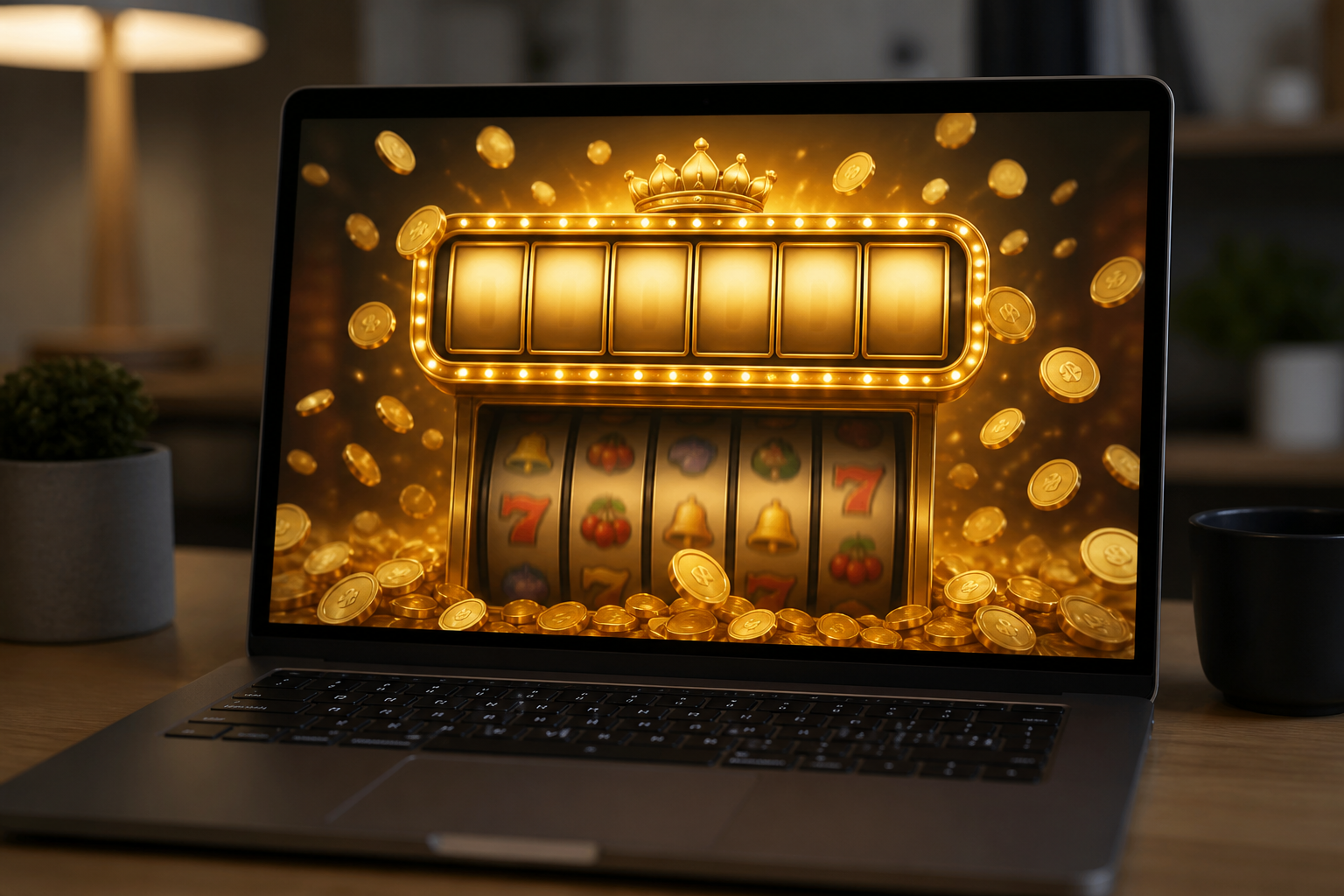
The trade-off: a bigger prize pool, usually a lower base RTP
Because a slice of every stake on a jackpot slot funds the jackpot pool instead of the everyday prize pool, the base game's own RTP on a jackpot title often runs a little lower than a similar non-jackpot slot from the same studio. That's not a hidden catch — it's the direct trade-off for a shot at a prize that can run into far more than the base game alone could ever pay out. Worth knowing going in, rather than assuming a jackpot slot pays identically to its non-jackpot sibling outside of the top prize itself.
Jackpots vs scratch cards' fixed prize structure
This site's core format takes the opposite approach on purpose: an online scratch card's top prize is fixed and printed into the paytable before you ever buy in, with no pool building up over time. That trade-off cuts both ways — a scratch card's top prize is smaller and known in advance, but every card carries the same odds of hitting it regardless of how long it's been since the last big win, which a progressive jackpot's climbing pool doesn't offer.
It's a genuine split by format: across the 200 scratch and instant-win titles in our own review database, not one carries a jackpot feature in its name or description — the format sticks to that fixed-prize structure consistently enough that a jackpot-branded scratch card would be the exception rather than the rule.
Straight answers
What's the difference between a fixed and progressive jackpot?
A fixed jackpot pays a set amount whenever you land the winning combination — it doesn't grow. A progressive jackpot pools a small share of every stake across the slot, often across a whole network of casinos, into a prize that climbs continuously until someone wins it and it resets to a base value.
Does a progressive jackpot ever reset mid-session?
It only resets to its base value the moment someone actually wins it — not on a timer, and not because you've been playing a while. Between wins it only ever grows, funded by a slice of every stake placed on that jackpot across every connected player.
Are must-drop jackpots guaranteed?
Yes, in the specific sense advertised — a must-drop jackpot is guaranteed to pay out by a certain ceiling value or, on some titles, by a certain time. It will hit before then; what it doesn't guarantee is which spin, or which player, it hits on.
Do jackpot slots pay less on the base game?
Often, yes, to a small degree — a slice of every stake on a jackpot slot is routed into the jackpot pool rather than the base-game prize pool, so the non-jackpot RTP on a jackpot version of a slot can run a little lower than an otherwise-similar non-jackpot title. It's the trade-off for a shot at the larger prize sitting on top.
Can a scratch card have a progressive jackpot?
A handful of instant-win titles do build in a jackpot feature, but it's far less common than on slots — most scratch cards stick to a fixed top prize printed into the paytable, which suits the format's one-reveal structure better than a pool that climbs over time.
Is a bigger jackpot always the better choice?
Not automatically — a larger, rarer-hitting progressive suits a different kind of session than a smaller, more frequent fixed jackpot. Worth deciding which trade-off you actually want before picking a slot on jackpot size alone.
Please gamble responsibly. GambleAware.org 18+