Everything to know about National Lottery scratch cards
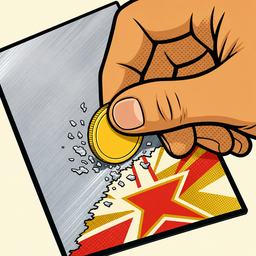
The paper scratch card sold at newsagents and supermarkets across the UK is still, by volume, the most familiar form of the game — Allwyn's National Lottery range chief among them. No account, no app required: buy over the counter, scratch with a coin, and you'll know within seconds whether you've won.
Price tiers
National Lottery cards are typically priced between £1 and £5, with higher-priced special editions appearing from time to time. As a rule, higher-price cards carry larger top prizes and often better overall odds — but it's printed on the ticket, so check rather than assume.
Check what's left
The operator publishes official data on which top prizes are still unclaimed for each game. Some players use this to decide which card to buy — "best scratch card to buy" usually just means checking this list.
Buy & scratch
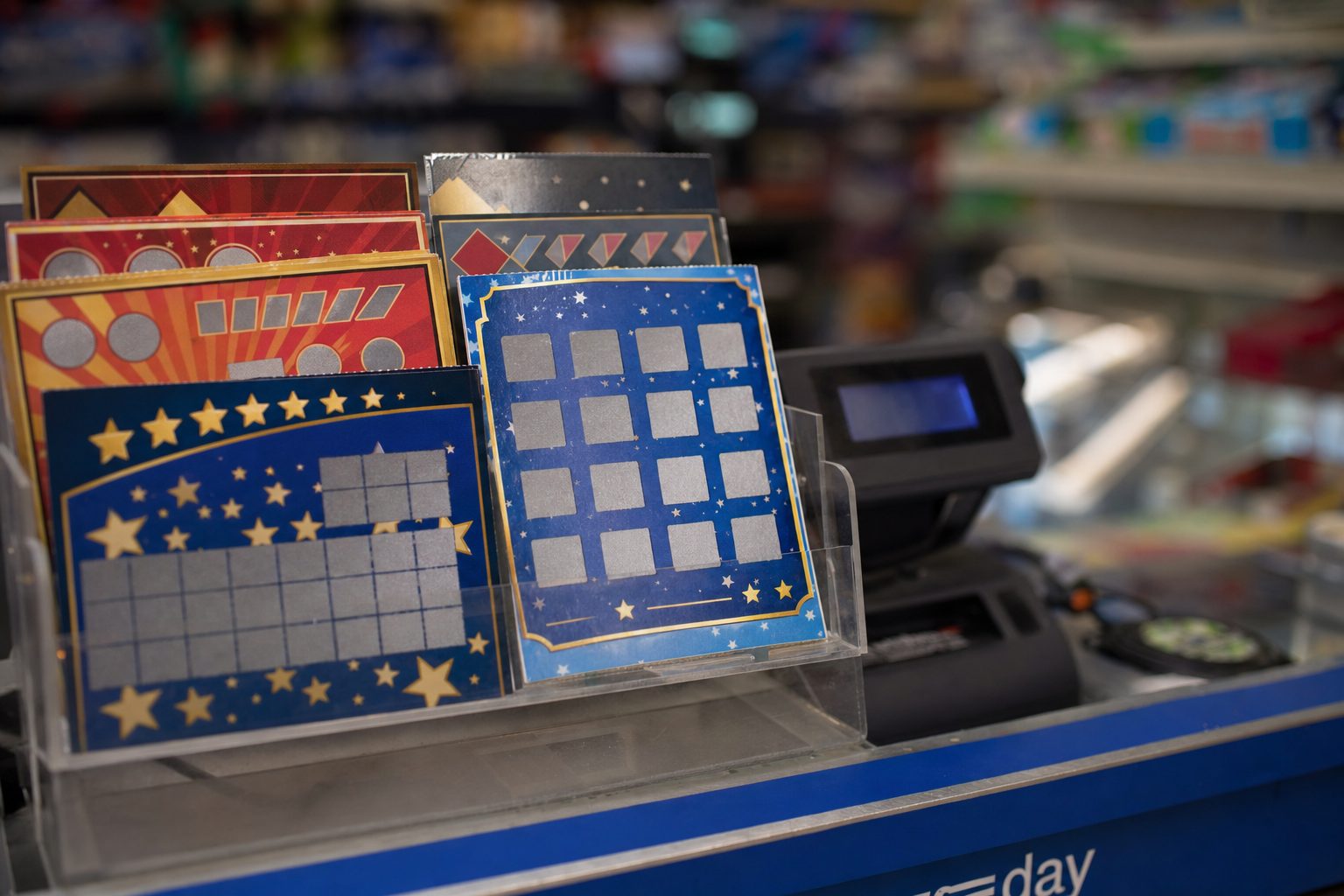
Available at newsagents, supermarkets and petrol stations across the UK. You must be 18 or over to buy a National Lottery product, and retailers are required to check.
A short history, in facts
Camelot ran the first National Lottery draw on 19 November 1994; paper scratch cards — badged "Instants" — followed roughly a year later, in 1995. Since then, upward of 650 different scratchcard games have been through the range at various points, with around a dozen or so typically on sale at any one time.
Camelot's licence wasn't renewed after a 2022 Gambling Commission decision, and Allwyn Entertainment took over running the National Lottery — including scratchcards — from 1 February 2024. In 2025, Allwyn marked 30 years of the format with a limited-edition "Scratch-Coin" card, a small sign of how much of a fixture the format has become in UK newsagents and supermarkets.
What's actually in newsagents right now
"National Lottery scratch cards" isn't one product — Allwyn runs dozens of named games at once, each with its own price, top prize and print run, and the exact line-up rotates as older games sell through and new ones launch.
To make that concrete rather than abstract, here's a snapshot of named games and their price/top-prize pairing published by Allwyn as of mid-2026. Treat this as a sample of the kind of range on sale, not a live stock list — always check the price and prize table printed on the card itself, or Allwyn's own game pages, for what's actually on the shelf and its exact odds on the day you buy.
| Game | Price | Top prize |
|---|---|---|
| Money Spider | £1 | £5,000 |
| £100,000 Jackpot | £1 | £100,000 |
| 10X | £2 | £100,000 |
| £250,000 Win All | £2 | £250,000 |
| Super 7s | £3 | £300,000 |
| Bingo Tripler | £3 | £300,000 |
| Millionaire Maker | £5 | £1,000,000 |
| Red Hot 7s | £5 | £700,000 |
| Deal Or No Deal | £5 | £1,500,000 |
A few patterns hold across most of the range: £1 cards tend to be simple match or reveal formats with prizes capped well below six figures; £5 cards are where the seven-figure top prizes and licensed/TV-branded themes (like the Deal Or No Deal tie-in above) tend to sit.
Games also close periodically once a print run sells out or reaches its planned end date — Allwyn publishes a running list of closed games alongside the live range, which is worth a quick check if a specific game name you remember has disappeared from shelves.
How the odds are published — and how wide they actually vary
Every National Lottery scratch card prints its overall odds of winning something, and the top prize for that specific game, on the ticket itself or the operator's official rules page for that game. These figures are fixed for the life of that print run — see our odds guide for how to read them.
In practice, published overall odds of winning any prize on a given game commonly fall somewhere in the 1-in-3 to 1-in-5 range, while top-prize odds vary far more dramatically: a game with a smaller headline jackpot and a large number of top prizes printed into the run can sit around 1-in-10,000 for that top prize, while a game built around one rare, very large prize can run into the millions to one.
The £4 Million Black and Gold scratchcard is the extreme end of that spread — only four £4,000,000 top prizes were ever printed into circulation across the whole game, and on at least one documented card the odds of that specific prize were roughly 1 in 4,232,860. One of those four was won by a Wetherspoons kitchen manager, Amadou Gillen, who bought two cards on a break from work — the first revealed a modest £20 win, the second made him a millionaire many times over. It's a genuinely rare outcome, which is exactly why it made the news rather than being routine.
Buying online vs the newsagent
Alongside the classic paper card, Allwyn runs digital instant-win games — officially "Interactive Instant Win Games" — through its own National Lottery website and app, playable once you've set up an online account. Separately, some independent National Lottery retailers now offer scratch cards through local delivery apps (Allwyn has partnered with Snappy Shopper for this), so a paper card can arrive at your door the same way a pint of milk would.
Both routes sit apart from the studio-built casino scratch cards we review on this site — the National Lottery operates under its own dedicated licence, distinct from the casino and betting licences held by the studios and operators we cover elsewhere on this site.
The range of themes and formats
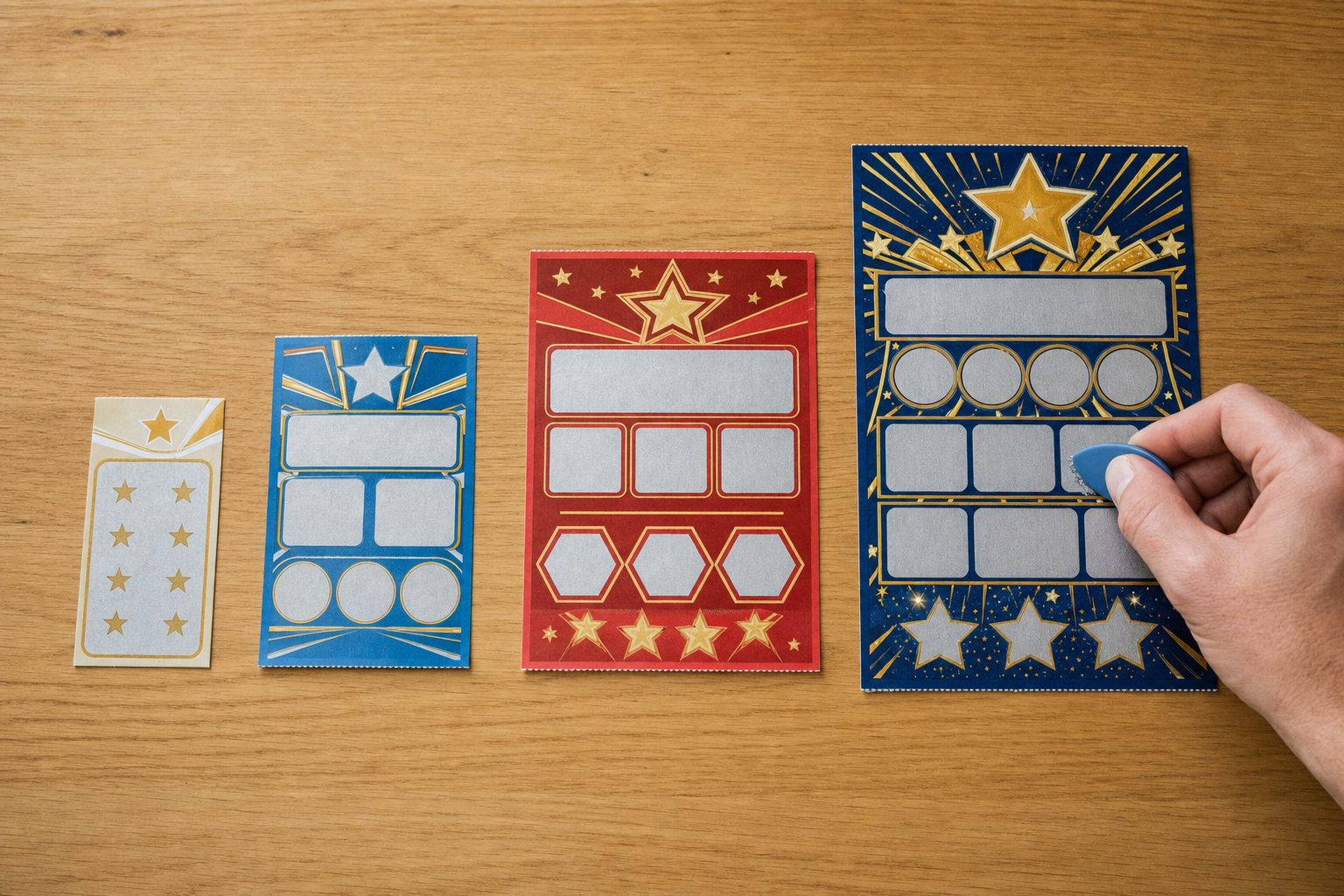
Physical scratch cards cover far more ground than a single "type" — match-three panels, X-times multipliers, bonus symbols that add an extra prize tier, and cards themed around everything from seasonal events to simple number games. The mechanic underneath is always the same reveal-and- match structure, but the presentation varies enough that most newsagents stock several different games at once, refreshed periodically as older print runs sell through and new ones launch.
What happens when you win — the actual claim process
How you claim depends on how much the card is worth, and the tiers are published rather than left to guesswork. Prizes up to £100 are normally payable in cash or straight onto your debit card at the retailer where you bought the ticket, the same way change works at a till. Between roughly £100 and £500, it's still often the retailer, though paying by cash versus card at that level is somewhat down to them.
From about £500 up to £50,000, you'd start a claim online through the National Lottery's own claim form rather than at the counter. Above £50,000, the process moves to an in-person appointment at one of the operator's regional centres, with extra identity checks before a payment that size is released.
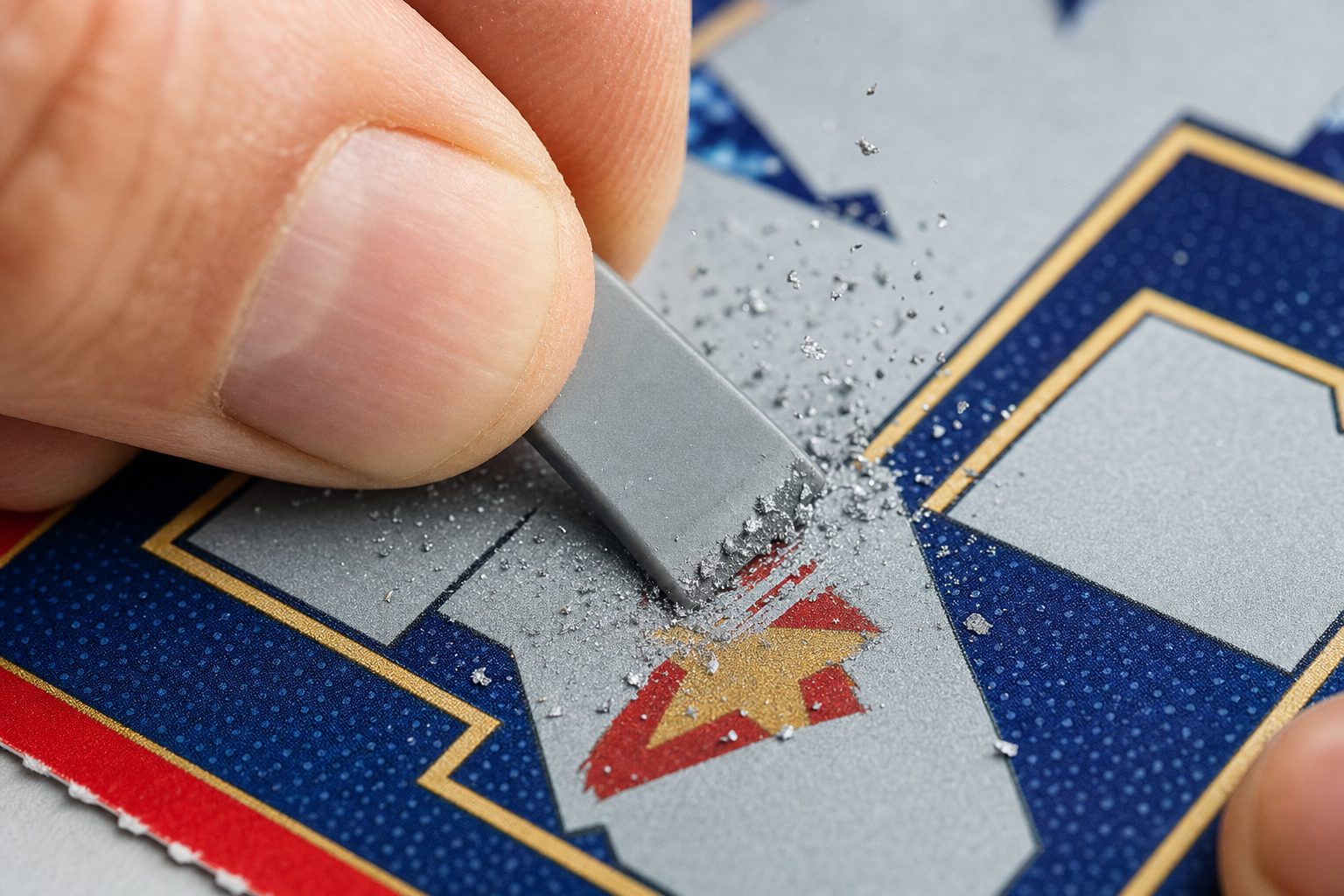
Whichever tier applies, you have 180 days from the date the specific game closes — not from the day you bought the card — to make a claim; miss that window and the prize money is redirected into the National Lottery Distribution Fund that supports good causes, rather than being paid out. Keep the card itself until any prize is confirmed and paid — a damaged, altered or unscannable barcode can see a claim refused, so avoid scratching harder than necessary once the result is clear, and store a winning card somewhere dry rather than in a pocket or wallet.
When a top prize runs out
Every scratchcard game is printed with a fixed, finite number of top prizes, and Allwyn publishes a Code of Practice covering exactly what happens once the last one is claimed. In short: once the final top prize for a game has been validated, retailers are allowed to keep selling whatever stock of that game has already been activated at their till, but no further unactivated stock of that game is released to shops.
Only the count of top prizes remaining is guaranteed to be updated within one working day on the operator's site — lower prize tiers aren't tracked live in the same way — which is why "prizes remaining" checkers really only tell you about the biggest prize on a given game, not the full picture of every smaller win still available.
Age restrictions — and why they exist
Buying any National Lottery product, scratchcards included, is restricted to over-18s across the UK, and that wasn't always the rule: the minimum age was raised from 16 to 18 in stages during 2021 — online sales to 16 and 17-year-olds stopped that April, with in-store sales following by October the same year.
The change came out of a government consultation that specifically flagged instant-win formats like scratchcards, after evidence suggested a link between playing National Lottery instant-win games at 16–17 and a higher likelihood of problem gambling later on. That history is worth knowing because it's a UK-specific, evidence-led decision, not a generic "gambling is for adults" disclaimer — it's the reason the age check at the till exists in its current form.
Buying a card as a gift for anyone under 18 isn't permitted regardless of the occasion, and if you're buying for an adult, the same age check applies to you as the purchaser, not the recipient — retailers are required to confirm the buyer's age at the till.
A note on collecting and swapping
Some players like collecting unscratched cards for their artwork or novelty value rather than playing them — that's a personal choice, but it's worth remembering a card only has monetary value once its result is confirmed. Trading or reselling scratched cards claiming an unconfirmed win isn't something any retailer or the operator will honour; a prize is only real once it's been validated against the operator's own records.
Keep any card you intend to claim in good condition and away from damp or heat until you've cashed it in — a barcode that won't scan can turn a genuine win into an avoidable argument at the till. It's a small habit worth keeping.
Straight answers
What's the best scratch card to buy?
There's no single "best" card for everyone — it depends on your budget and what odds you're comfortable with. The most useful habit is checking the official prizes-remaining data before buying, rather than picking by theme alone.
How long do I have to claim a scratchcard prize?
180 days from the date the specific game closes, not from the day you bought the card. Miss that window and the prize is redirected to the National Lottery Distribution Fund rather than paid out, so it's worth checking older cards before assuming a game has simply "ended."
Do I need ID to buy a scratch card?
You need to be 18 or over, and retailers can ask for ID if they're unsure of your age — a rule tightened from 16 to 18 in 2021 specifically because of evidence linking under-18 instant-win play to problem gambling risk. It applies across the UK regardless of which shop you buy from.
Please gamble responsibly. GambleAware.org 18+