How Scratch Card Odds Actually Work
Scratch card odds are decided before you ever buy in — paper or pixel. Nothing you do while scratching changes the result; it was fixed the moment the card (or the game round) was generated. Two figures matter more than any theme or jackpot number: the RTP, and the gap between "odds of winning something" and "odds of winning the top prize".
Return to Player (RTP)
The percentage of all money staked on a game that's paid back to players over the long run. It's a statistical average across huge numbers of plays, not a promise for your session.
Overall win chance
The odds of winning any prize, however small — often the headline number quoted on a card. It's usually far shorter than the odds of hitting the top prize.
Top-prize odds
The odds of landing the single biggest prize on that specific card. These are always much longer than the overall win chance, and vary a lot between games.
What we actually see across the games we review
Not every online scratch card publishes an RTP figure up front — of the 200 games we've reviewed so far, 27 disclose one. Among those, the published figures range from 60% to 97.12%, which is a wide spread. The takeaway: don't assume every card in a studio's range shares the same odds — check the individual card's info screen before you play, not the marketing around it.
Physical vs online odds
National Lottery and other paper cards print their overall odds and prize breakdown directly on the ticket or its official rules page, along with how many top prizes have already been claimed. Online scratch cards at licensed casinos work differently: the RNG behind each card is tested and certified by the operator's licensing body, and the RTP — when published — appears on the game's info or paytable screen rather than the card art itself.
Why scratch cards often test lower than slots
It's not unusual for a scratch card's published RTP to sit a few points below a typical online slot's. Part of that comes down to format: a slot's RTP is built from many small, frequent outcomes across a spinning reel set, which gives designers a lot of room to fine-tune the return curve. A scratch card resolves in one instant reveal — there's no spin sequence to spread variance across — so the prize structure has to be simpler, and that simplicity tends to land at a slightly lower RTP band.
It's a design consequence of the format, not a sign that scratch cards are somehow treated worse by studios or regulators. If a lower RTP matters to you more than the instant-result format, that's a legitimate reason to lean toward slots instead — the two formats simply optimise for different things.
Reading a paytable properly
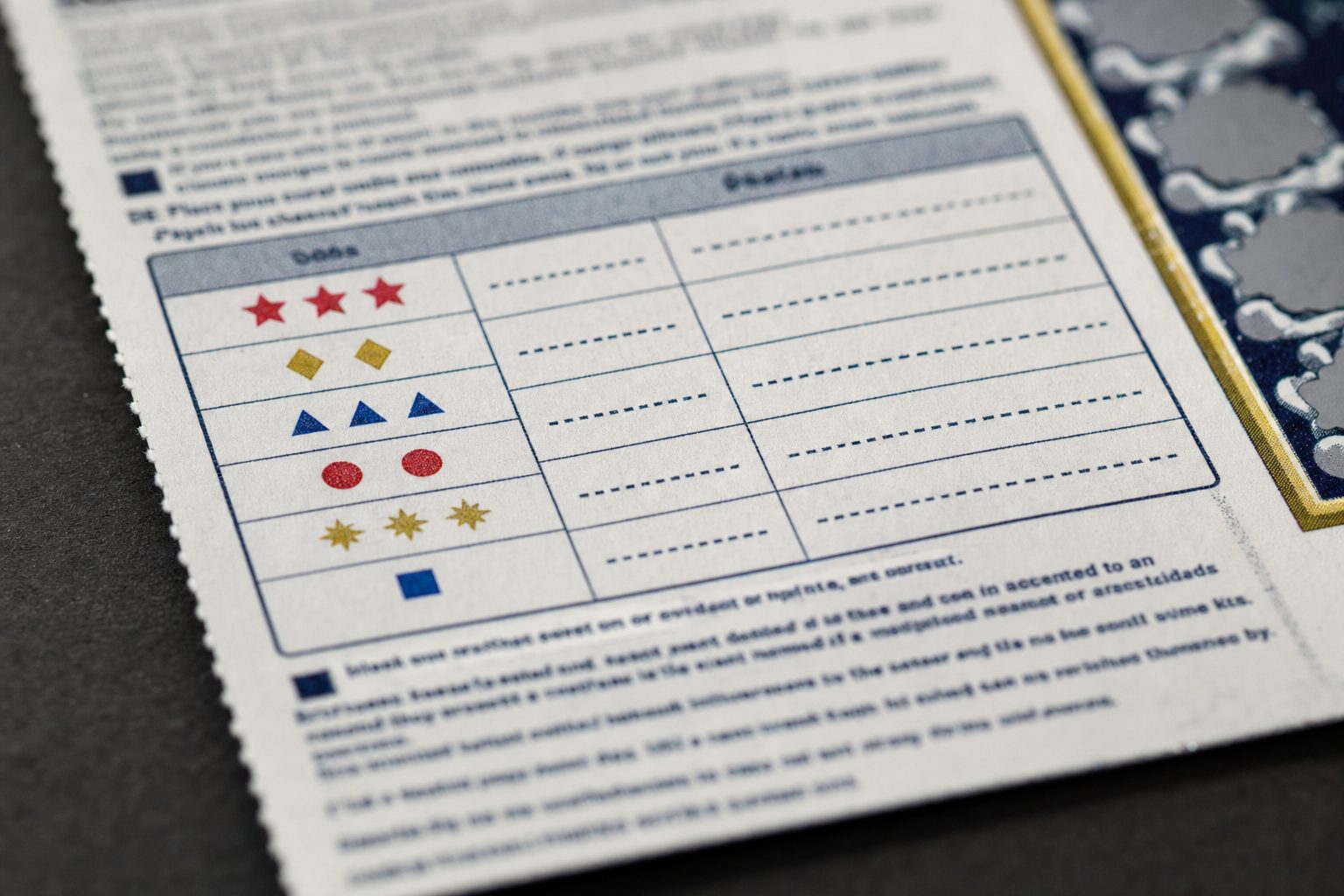
Whether it's a National Lottery ticket or an online paytable screen, the same handful of numbers matter: the price per play, the top prize, the overall odds of winning something, and — for online cards specifically, where published — the RTP. Treat the theme and presentation as irrelevant to any of this; a card wrapped in a bright, cheerful design carries exactly the odds printed on it, no better and no worse than a plainer-looking card with the same numbers.
If a card doesn't publish one of these figures, treat that as missing information rather than assuming it's average — some studios simply don't disclose every figure for every title. Where we know a figure, we publish it on the review; where we don't, we say so plainly rather than guess at it or round it to something that sounds plausible.
Straight answers
Does a higher RTP mean I'm more likely to win?
Not necessarily on any single play — RTP describes the long-run average across huge volumes of rounds. A higher published RTP is a better long-run rate of return, but it doesn't change the odds of any individual scratch. Overall win chance and top-prize odds are separate figures worth checking too.
Do more expensive cards have better odds?
On paper cards, higher-price tiers often carry better overall odds and larger top prizes — but it's printed on the ticket, so check rather than assume. Online, price and odds aren't linked in the same way; a lower-stake card can carry the same RTP as a higher-stake one.
Can the odds change after a card is released?
For a given card, no — the odds are fixed at design time. For a run of physical cards, the mix of remaining prizes naturally shifts as tickets are sold and top prizes are claimed, which is why official "prizes remaining" data is worth checking before you buy.
Is there any way to improve your odds on a scratch card?
Not through how you play — the result is fixed before you scratch, so there's no skill or timing that shifts it. The only things that genuinely move your odds are choices you make before buying: picking a card with a higher published RTP, or, for physical tickets, checking which top prizes are still unclaimed. Everything else — lucky corners, "due" cards, scratching order — is coincidence.
Please gamble responsibly. GambleAware.org 18+