Responsible gambling and scratch cards
Everything on this site — scratch card reviews, odds explainers, National Lottery guidance — is written on one assumption: gambling is entertainment, not a plan for money, and it only stays entertainment if you stay in control of it. This page is about the practical side of that: the tools that help, the signs worth watching for, and exactly where to go if things stop feeling fun.
Entertainment, not income
Every scratch card, slot and bet is built with a house edge. Treat the cost of playing as the price of entertainment, the same way you'd budget for a cinema ticket — never as money you expect back.
Decide your limits in advance
Set a budget and a time limit before you start playing, not while you're in the middle of a session. Decisions made in advance, when you're not caught up in the moment, tend to hold up better.
Use the tools that are built for this
Deposit limits, loss limits, reality checks, time-outs and self-exclusion are available at every UK-licensed operator — often for free, in your account settings, before you ever need them.
Tools worth knowing about
Most of these live inside a licensed operator's account settings, and they're free to use:
- Deposit and loss limits — cap how much you can add to your account, or lose, over a day, week or month.
- Reality checks — a pop-up reminder of how long you've been playing and how much you've spent, at intervals you choose.
- Time-outs — a short break from your account, typically a day to six weeks, that you can't reverse early.
- Self-exclusion via GamStop — a single registration that blocks your access to every UK-licensed gambling site for a period you choose, from six months to five years.
Signs worth paying attention to
There's no single moment that marks the line between entertainment and a problem, but some patterns are worth noticing in yourself or someone close to you: chasing losses by staking more to "win it back", spending more time or money than you'd planned and not telling anyone, feeling irritable or anxious when you try to cut back, borrowing money to keep playing, or gambling being the first thing you think about when something stressful happens. None of these mean you've "failed" — they're just a signal that it's worth talking to someone or using one of the tools above.
Where to get help
GambleAware offers free, confidential advice and support, including the National Gambling Helpline. GamStop handles UK-wide self-exclusion in one place. Gamblers Anonymous and Gambling Therapy both run free peer-support communities if you'd rather talk to people with similar experience. None of these require you to have hit "rock bottom" first — they're there for anyone who wants support, at any stage.
Physical cards need a different approach
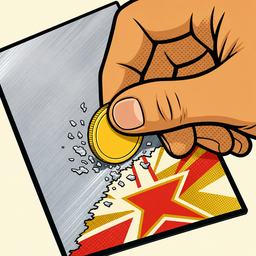
Everything above — deposit limits, reality checks, GamStop self-exclusion — lives inside an online operator's account, which means none of it reaches a paper National Lottery card bought over the counter. GamStop blocks your access to online gambling sites; it does nothing to stop you buying a scratch card at a newsagent, because there's no account or website involved in that purchase at all.
If physical cards specifically are the harder habit to manage, the tools that actually help are different: setting yourself a cash budget before you go shopping and leaving cards or debit cards you don't need at home, avoiding the specific shops or routines where buying has become automatic, and talking to someone if it's becoming difficult to stick to a limit.
The support services below — GambleAware, the National Gambling Helpline, Gamblers Anonymous — cover every form of gambling, physical cards included; it's specifically the account-based online tools that don't extend to a till purchase.

If you're worried about someone else
Supporting someone who's struggling with gambling is its own kind of hard. GambleAware and Gambling Therapy both offer resources specifically for friends and family, not just the person gambling — you don't have to navigate it alone either.
How this applies to what's on this site
The demos we link to are built to be tried without risk — no account, no deposit, no real money — specifically so you can see how a card plays before deciding whether real-money play interests you at all. That's a genuinely different thing to gambling itself, and it's worth treating it that way: a demo showing you enjoy a game's theme or pace isn't a signal that real-money play with the same game will feel the same, once actual stakes are involved.
That's also part of why we structured demos behind a deliberate 18+ confirmation step rather than letting them load automatically the moment you land on a review — the extra click is small, but it's a genuine decision point rather than something that just happens to you as you scroll, and that principle matters more than it might seem at first glance.
Straight answers
Does self-exclusion through GamStop cover every gambling site?
It covers every operator licensed by the UK Gambling Commission, which is every legally operating gambling site targeting UK players. It doesn't affect unlicensed offshore sites — another reason to only ever use licensed operators in the first place.
Can I set limits without excluding myself completely?
Yes — deposit limits, loss limits and time-outs all let you keep playing within boundaries you set, without the full stop of self-exclusion. Most people start there before considering GamStop.
Is asking for help a big step, or can it be something small?
It can be as small as reading GambleAware's site or setting a deposit limit tonight. You don't need a crisis to justify using any of these tools or services — they're built for exactly this stage, not just the worst case.
Are scratch cards a particular risk for children or under-18s?
Buying a scratch card, physical or online, is restricted to over-18s by law — retailers must check ID, and every licensed online operator verifies age before real-money play. Researchers and safer-gambling charities have raised concerns about the format's low price and lottery-style branding making it feel less serious to younger people than other gambling products, which is exactly why the age check exists and why we'd encourage any parent with concerns to start with GambleAware's family resources rather than treat it as a minor issue.
Please gamble responsibly. GambleAware.org 18+